
Book Appointment
Book Appointment
Cornea Services at Lifeline Eye Centre
Keratoconus, corneal scarring, infection damage or graft failure — a cornea transplant is not one single operation. At Lifeline Eye Centre, Dr. Javed H. Farooqui evaluates whether you need a full-thickness graft or a safer partial-thickness one (DALK, DSAEK, DMEK), and explains exactly what vision you can realistically expect afterwards.
35+ Yrs
Serving East Delhi
Dual
Cornea Fellowships (India & Australia)
4 Types
Of Keratoplasty Offered
In-House
OT, Pharmacy & Optical
The cornea is the clear front window of the eye. When it turns cloudy, scarred or swollen — after an injury, an infection, advanced keratoconus, or years after a cataract operation — glasses and drops stop helping, because the problem is the window itself. A cornea transplant, or keratoplasty, replaces the damaged layers with healthy donor tissue so light can focus properly again.
Modern cornea surgery is rarely all-or-nothing. Depending on which layer is diseased, only the front layers may need replacing (DALK), or only the inner endothelial layer (DSAEK, DMEK), leaving the rest of your own cornea untouched. Partial-thickness surgery generally means faster visual recovery, fewer stitches and a lower risk of rejection than a full-thickness graft — but it is only appropriate for the right eye and the right diagnosis. Deciding which one you need is the most important part of the consultation.
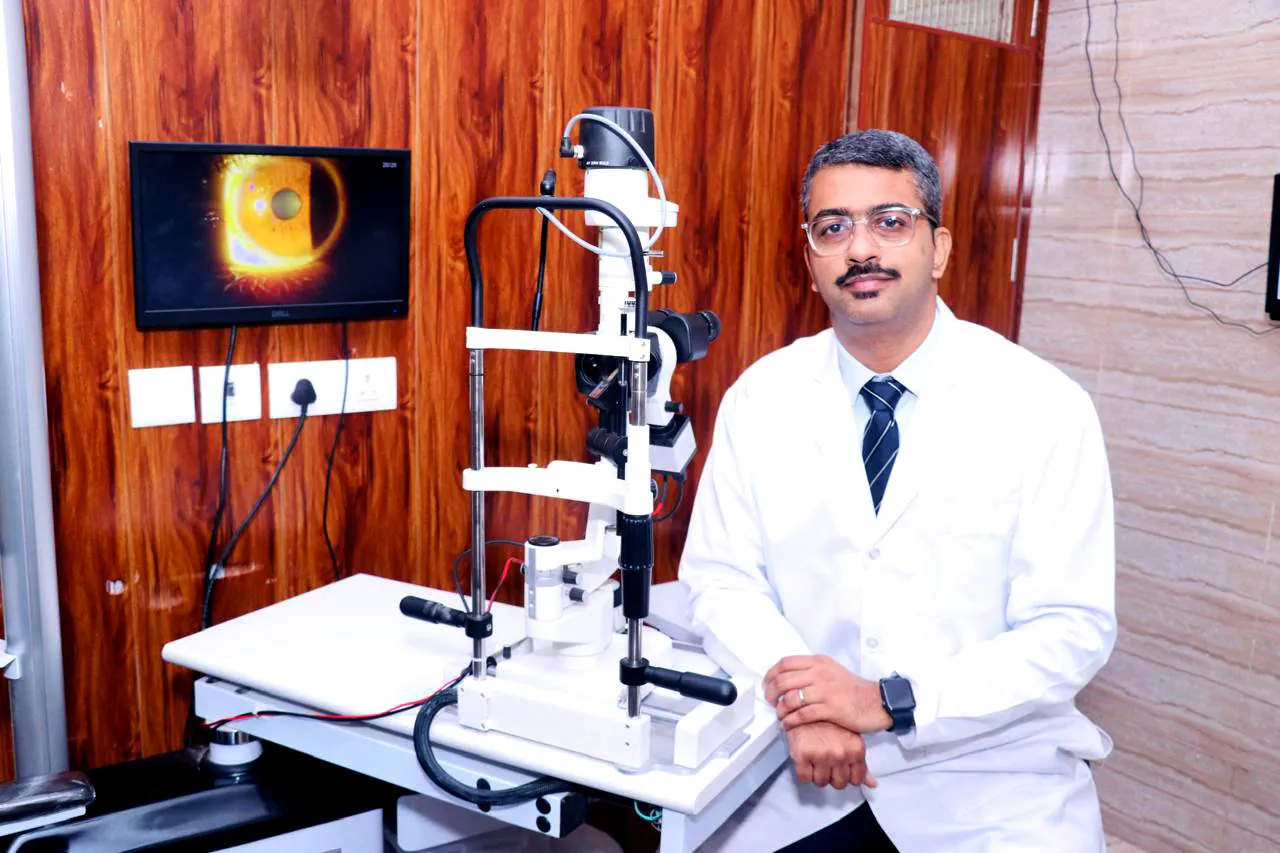
Lifeline Eye Centre is a dedicated eye care facility in Laxmi Nagar, built on a 35-year hospital legacy in East Delhi. Your evaluation, corneal imaging, surgery and every follow-up happen with the same cornea-trained surgeon — Dr. Javed H. Farooqui, DNB Ophthalmology, with fellowships in cornea and anterior segment at Royal Adelaide Hospital, Australia and Dr. Shroff's Charity Eye Hospital, and prior service with Orbis International.
🔴 Cloudy or hazy vision that glasses can't correct
🔴 A white scar or spot on the cornea after injury or infection
🔴 Keratoconus with a steadily changing spectacle number
🔴 Vision worst on waking, clearing through the day (corneal swelling)
🔴 Blurring that began months or years after cataract surgery
🔴 An earlier graft that has turned cloudy or is failing
Cornea transplant outcomes depend heavily on who operates and how carefully the eye is selected. Here's how Lifeline compares with the other options in Delhi NCR.
Who Performs the Surgery
LIFELINE EYE CENTRE
Cornea fellowship-trained surgeon, same doctor throughout
CORPORATE EYE CHAINS
Varies by centre and roster
GENERAL HOSPITAL EYE OPD
Usually a general ophthalmologist
Techniques Offered
LIFELINE EYE CENTRE
Full and partial thickness — PK, DALK, DSAEK, DMEK
CORPORATE EYE CHAINS
Usually available
GENERAL HOSPITAL EYE OPD
Often full-thickness only
Cost & Clarity
LIFELINE EYE CENTRE
Itemised estimate before surgery; TPA and insurance accepted
CORPORATE EYE CHAINS
Package-led pricing
GENERAL HOSPITAL EYE OPD
Lower cost, longer waiting lists
Best Suited For
LIFELINE EYE CENTRE
Keratoconus, corneal scarring, endothelial failure, repeat grafts
CORPORATE EYE CHAINS
High-volume elective procedures
GENERAL HOSPITAL EYE OPD
Routine eye care and emergencies
If you have been told you need a cornea transplant, a second opinion is worth taking — in many eyes, a partial-thickness graft or cross-linking is enough, and full-thickness surgery can be avoided.
👁️
Penetrating Keratoplasty (PK)
Full-thickness replacement of the cornea, used when scarring or damage runs through every layer — including deep scars and advanced graft failure.
🪶
DALK
Deep anterior lamellar keratoplasty replaces only the front layers and keeps your own inner layer — commonly used in keratoconus and superficial scars.
💠
DSAEK
Replaces just the failed inner endothelial layer through a small incision — for corneal swelling after cataract surgery and Fuchs' dystrophy.
🔬
DMEK
The thinnest endothelial graft available, offering quicker visual recovery and a lower rejection risk in carefully selected eyes.
🛡️
Therapeutic Keratoplasty
Emergency grafting to save an eye with a non-healing corneal ulcer, severe infection or perforation, where medication alone is not enough.
🌱
Limbal Stem Cell Transplant (SLET)
Restores the corneal surface after chemical or thermal burns, often as a first stage before any transplant can succeed.
🩹
Amniotic Membrane Grafting
Helps a damaged corneal surface heal and reduces scarring — used for persistent epithelial defects and ocular surface disease.
🔗
Collagen Cross-Linking (C3R)
Halts the progression of keratoconus early, and in many patients removes the need for a transplant altogether.
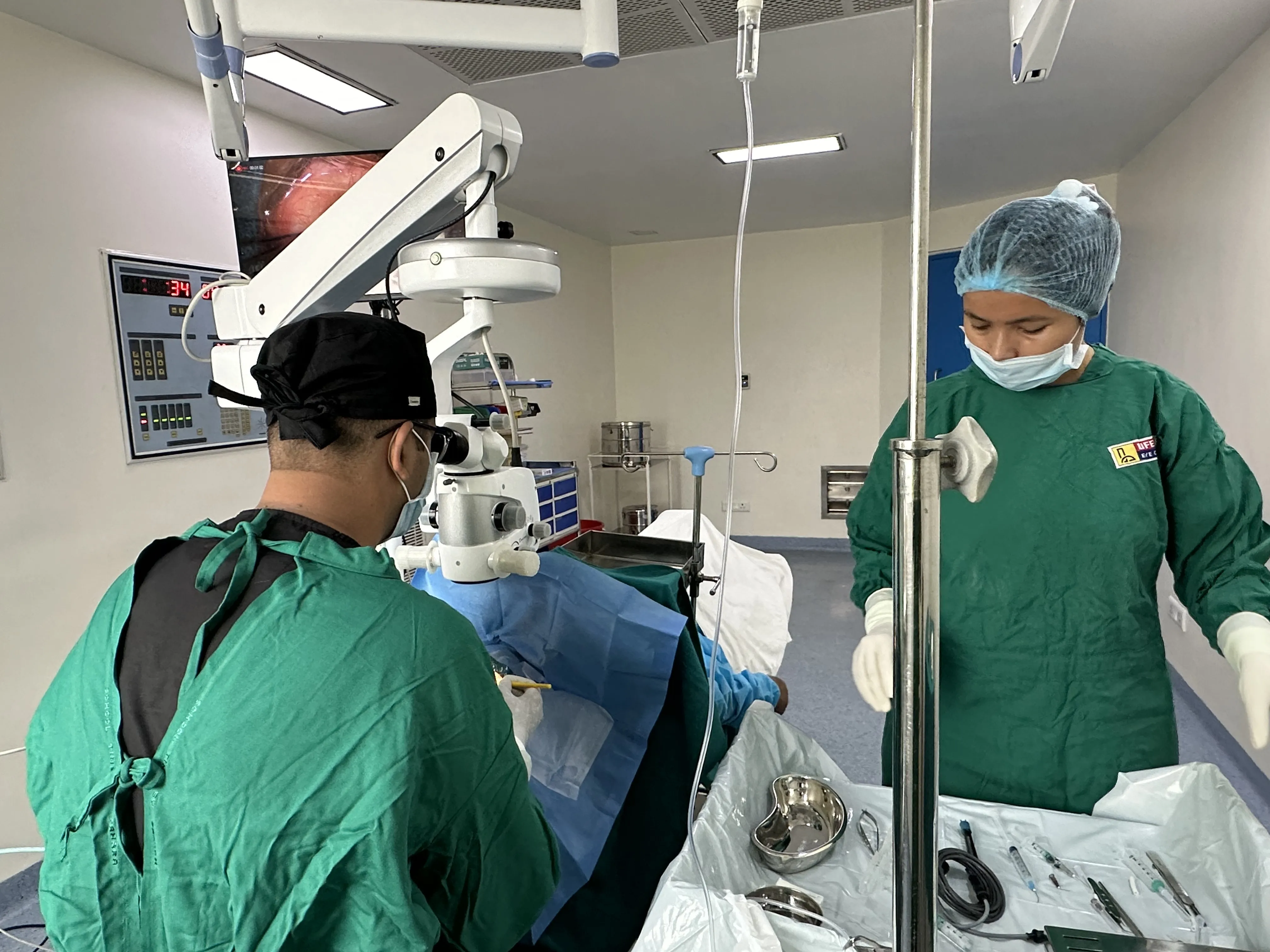
A cornea transplant needs close follow-up for months, not weeks — sutures are removed gradually, medication is tapered slowly, and early signs of rejection have to be caught quickly. At Lifeline, the surgeon who evaluates your cornea is the one who operates and the one who sees you at every review visit.
✓ Corneal topography and imaging before any decision
✓ Donor tissue sourced through registered eye banks
✓ Structured graft monitoring through the first year
Evaluate
Detailed corneal examination and imaging to confirm whether a graft is needed, and which type.
Plan & Schedule
Fitness checks, insurance or TPA approval, and donor tissue arranged through a registered eye bank.
Surgery
Performed in our in-house operating theatre, usually under local anaesthesia, with same-day discharge in most cases.
Recover & Monitor
Scheduled reviews, staged suture removal and a slow medication taper as vision settles.

Corneal topography, pachymetry and slit-lamp assessment tell us which layers are actually diseased. That is what separates an eye that needs a full-thickness graft from one that can be treated with a thin endothelial graft — or with cross-linking instead.
👨⚕️
Cornea-Trained Surgeon
🏥
In-House OT, Pharmacy & Optical
💳
Cashless TPA & Insurance
📍
Easy Access in East Delhi
★★★★★
I was told elsewhere that I needed a full transplant for keratoconus. Dr. Farooqui explained why a partial graft was enough in my case and walked me through every step.
— Mohd. Adnan
★★★★★
My father's vision had gone cloudy years after his cataract operation. The team was patient with him at every follow-up and the difference now is very clear.
— Priya M.
★★★★★
Everything from the tests to the surgery to the medicines happened in one place. Costs were explained upfront and my insurance was handled without running around.
— Rakesh K.
Laxmi Nagar
Preet Vihar
Shakarpur
Patparganj
Mayur Vihar
Anand Vihar
Karkardooma
Vaishali & Indirapuram
Bring your previous reports and prescriptions. You'll leave knowing whether you need surgery, which type, what it costs, and what your vision can realistically become.
Q1. What exactly is a cornea transplant?
It is surgery to replace a damaged or clouded cornea — the clear front window of your eye — with healthy donor tissue. Depending on which layers are affected, the whole cornea or only specific layers are replaced.
Q2. Will I need a full-thickness or a partial-thickness graft?
That is decided after corneal imaging and examination. If only the front layers are scarred, DALK may be enough; if only the inner layer has failed, DSAEK or DMEK is usually preferred. Full-thickness surgery is reserved for damage that runs through every layer.
Q3. Where does the donor cornea come from?
Donor tissue is obtained through registered eye banks, where it is screened and quality-graded before release. Donation is voluntary and unpaid, and the donor's identity is not shared.
Q4. How long will I have to wait for donor tissue?
Waiting times depend on eye bank availability and the type of graft you need. Emergency cases such as corneal perforation are prioritised. Your surgeon will give you a realistic timeline once your evaluation is complete.
Q5. Is the surgery painful? Will I be asleep?
Most cornea transplants are performed under local anaesthesia, so the eye is numb and you stay awake but comfortable. General anaesthesia is used in selected cases. Mild irritation and watering for a few days afterwards is normal and is managed with medication.
Q6. How long does vision take to recover?
Endothelial grafts such as DSAEK and DMEK often show improvement within weeks. Full-thickness grafts settle far more gradually, sometimes over a year, as sutures are removed in stages. Your final spectacle or contact lens number is prescribed only once the cornea has stabilised.
Q7. What is graft rejection, and what should I watch for?
Rejection is the body reacting against the donor tissue. Warning signs are redness, sensitivity to light, pain and a sudden drop in vision. Caught early, it is often reversible with prompt treatment — which is why follow-up visits and eye drops must not be stopped on your own.
Q8. Is cornea transplant covered by insurance?
Keratoplasty is a medically indicated procedure and is covered by most health insurance policies. Lifeline Eye Centre is empanelled with leading TPAs and insurers — our team will check your policy and process the approval before your surgery date.
Q9. How do I book a cornea consultation at Lifeline Eye Centre?
Book online using the appointment button on this page, call 9599444445, or visit us at A-13, Patparganj Road, Priyadarshini Vihar, Laxmi Nagar, Delhi 110092. Please carry any previous eye reports, topography scans and prescriptions with you.